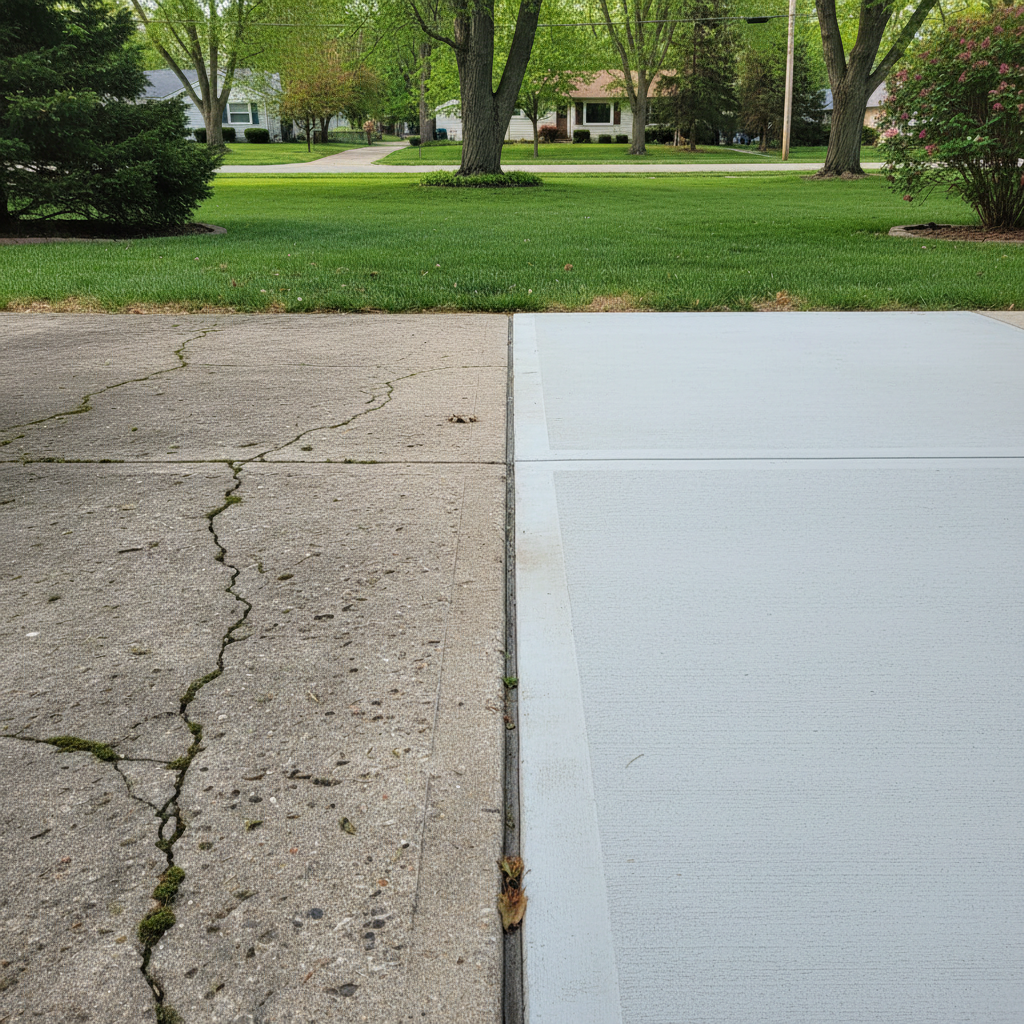
Your concrete driveway, patio, or walkway is looking pretty rough these days. Maybe there's a big crack running through it, or a section has sunk, turning into a real trip hazard. It's an eyesore, no doubt, and you know you need to do something. But what's the best way to tackle it? For most homeowners right here in Joliet, it usually boils down to two main approaches: patching and resurfacing, or lifting and leveling the slab. Let's dig into what each one involves, and which might make the most sense for your specific situation.
Patching & Resurfacing: The Quick Fix
When I talk about patching or resurfacing, I'm generally talking about repairs that just deal with the surface. This is where you might fill cracks with a sealant, or put down a new, thin layer of concrete or a polymer-modified overlay right over the existing slab. Think of it like giving an old wall a fresh coat of paint – it'll look better for a bit, but it won't fix any structural problems hiding underneath.
- Cost: This is almost always the cheaper option up front. You could grab a bag of patching compound for just a few bucks, or hire someone for a bigger resurfacing job; either way, it's significantly less than a full slab lift.
- Durability: Now, this is where things get a little tricky. If your underlying concrete is still stable and sound, and only has minor surface cracks or spalling, a good quality resurfacer can actually hold up pretty well. But if the slab is moving, sinking, or has deep structural cracks, patching is really just a temporary band-aid. Those cracks will probably pop right back up, and the resurfacing material itself can delaminate or crack. Especially with our freeze-thaw cycles here in Joliet, water sneaks into those hairline cracks, freezes, expands, and just makes everything worse.
- Maintenance: Expect patched areas to need re-patching over time. Resurfaced areas need to stay clean and sealed to get the most out of their lifespan.
- Appearance: A well-done resurfacing job can make old concrete look brand new, or even give it a decorative finish. Patching, though, often leaves visible lines or color differences. Honestly, it can look a bit messy.
This approach works best for minor surface imperfections, small, stable cracks, or if you're planning to sell your house soon and just need a quick cosmetic fix to spruce things up.
Slab Lifting (Polyjacking/Mudjacking): The Structural Solution
Slab lifting, which people often call polyjacking (because it uses polyurethane foam) or mudjacking (which uses a cement-based slurry), is a completely different animal. Instead of just fixing the surface, we're actually tackling the root cause of the problem: a void or unstable soil underneath the concrete slab that's making it sink. We drill small holes in the slab, then inject material underneath. This fills the void and lifts the concrete right back to its original level.
- Cost: Generally, slab lifting costs more up front than patching or resurfacing a similar area. It's a more involved process, requiring specialized equipment and expertise. However, it's usually much, much less expensive than tearing out the entire slab and replacing it.
- Durability: This is the big win for slab lifting. By filling the void and stabilizing the base, you're giving the concrete a proper foundation again. This really extends the life of your existing concrete, stopping further sinking and often closing up existing cracks. Polyurethane foam, in particular, is super stable, lightweight, and won't wash away.
- Maintenance: Once we've lifted and leveled it, your concrete should need minimal maintenance – just your regular cleaning and sealing. You've fixed the underlying issue, so you won't be constantly re-patching.
- Appearance: The main goal here is to level the slab, getting rid of trip hazards and improving drainage. While existing cracks won't vanish completely, they often close up quite a bit. You'll see small, dime-sized holes that we patch after the injection, which are far less noticeable than a severely uneven slab, wouldn't you agree?
For homes in places like the older parts of Joliet, where soil settlement can be pretty common, or if you've got significant unevenness, trip hazards, or drainage issues, slab lifting is almost always the smarter, longer-term investment.
My Recommendation for Joliet Homeowners
Look, I'm not going to tell you to spend more money than you need to. If you've just got a few hairline cracks and the slab is otherwise stable, a good quality patch or resurfacer might do the trick for a few years. But if your concrete is significantly uneven, has large cracks, or is causing drainage problems around your foundation, you're just throwing money away on patches. You really need to address the underlying issue.
For most situations where concrete has sunk or is severely cracked because of settlement, I'm going to lean towards slab lifting. It's a more permanent, cost-effective solution in the long run than repeatedly patching a problem that just won't go away. We've seen it time and again at Aim High Concrete Co. – homeowners who tried to patch for years eventually call us for a lift anyway. Save yourself the headache and do it right the first time. It'll save you money and frustration down the road, and your concrete will thank you for it.